
Realistic Hunting Skills and Challenges
Level tracking, stealth, and challenge goals without wasting early currency.
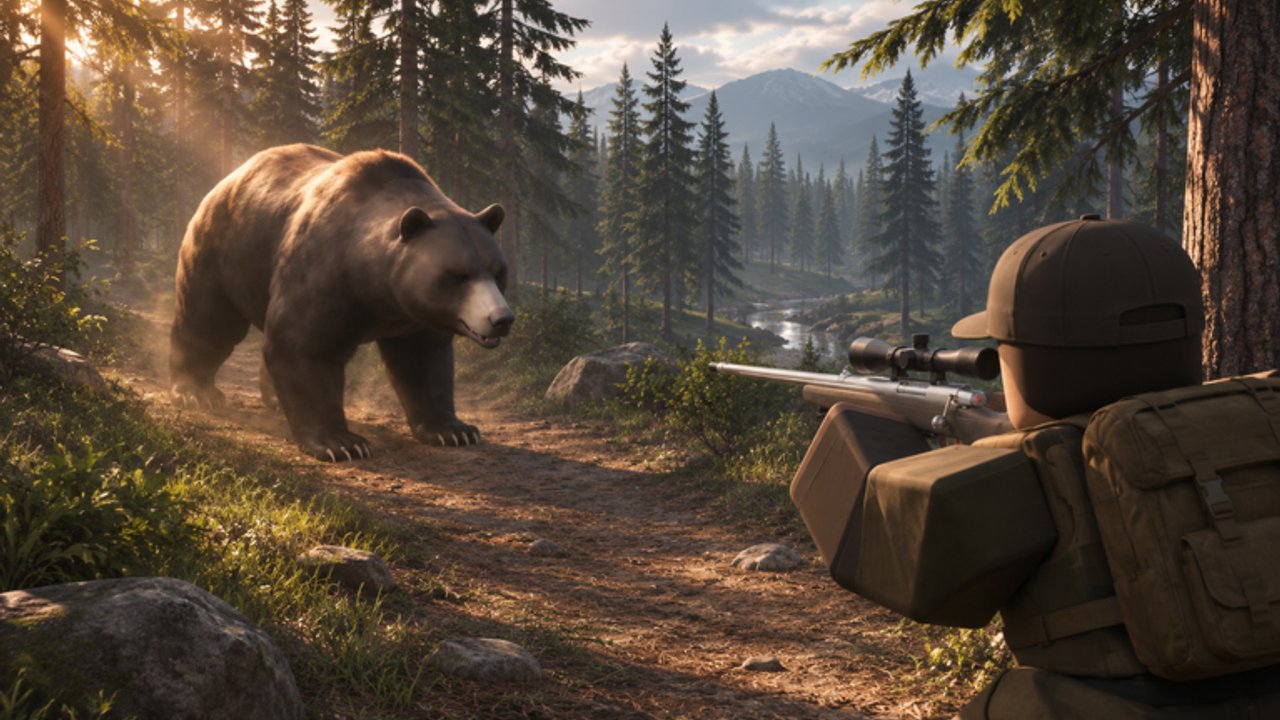
Realistic Hunting pairs open-world stalks with a skills and challenges layer that quietly decides how readable the forest feels. This guide explains how to spend early unlocks, which challenge types teach real habits, and how to avoid dumping progress into flashy nodes you will not use. Read it after Getting Started and before you obsess over rare coats on the rare animals page.
What skills actually buy you
Skill trees in this experience lean practical: sharper track reading, quieter movement windows, better awareness of wind or animal pressure, and quality-of-life that shortens recovery after a hit. They do not replace marksmanship. A maxed awareness node still fails if you sprint upwind with the ATV parked on the knoll.
Treat skills as multipliers on fundamentals from tracking and wind and controls. Unlock order should answer: “What failed on my last three hunts?” If blood trails go cold, invest in tracking clarity. If animals hear you early, invest in noise discipline. If you keep missing vitals, stop buying skills and dry-fire on deer instead.
Early unlock priority (first week)
- Track / trail readability — helps every species and pairs with the animals list on the tier list.
- Noise or stance efficiency — reduces accidental sprint spikes while you learn mobile and PC inputs.
- Carry / recovery helpers — only after you can drop animals cleanly; otherwise you haul nothing.
- Optics or stability adjacent unlocks — confirm they stack with your rifle path on the weapons tier list.
- Vanity or cabin-facing nodes — last. Mounts look better when the hunts that filled them were honest.
Skip “everything at once.” Currency and challenge rewards feel scarce early; a focused tree beats a scattered one.
How challenges teach the game
Challenges usually ask for a species, a shot standard, a travel condition, or a cabin goal. The best ones force a single discipline:
- Species challenges push you into the right habitat instead of random wandering.
- Quality shot challenges punish panic mag-dumps and reward the one-shot loop from Getting Started.
- Stealth or distance challenges make wind and crouch non-optional.
- Cabin / trophy challenges send you back to cabin and trophies with a purpose.
Accept one active challenge per session when learning. Stacking four goals turns every moose into an argument with yourself.
Challenge order that builds confidence
Phase A — Deer school: Finish common deer goals on foot only. No ATV. Log how many stalks broke from noise versus bad wind.
Phase B — Wind exams: Take challenges that require clean approaches; reread Tracking and Wind between attempts.
Phase C — Caliber step-up: Move to elk or moose goals only after your mid-tier rifle feels boringly reliable.
Phase D — Pressure game: Bear or contested public-server challenges with a partner using Players Hub roles.
Phase E — Rare flex: Coat-specific goals last. Rare animals are a patience economy, not a skill dump.
Co-op and shared challenges
Servers hold up to eight hunters. Challenge credit is still personal, but trail ownership is social. Agree who is “on” a challenge animal before the stalk. If two friends need the same moose, alternate nights instead of racing the blood trail. Live sessions like the embedded video show how long a real forest loop can run—use them to pace expectations, not to copy every risky shot.
Skills versus scripts
If a challenge feels impossible, the answer is almost never an executor menu. ESP and teleport tools skip the exact habits skills are meant to teach and risk the account—see the Scripts Hub. Legitimate pressure comes from better wind reads, calmer controls, and a rifle you trust.
Codes, patches, and reset anxiety
Promo codes from the Codes Hub (when they exist) can accelerate currency but should not rearrange your unlock order. After a patch, re-test noise and recoil before spending a week of challenge progress on a newly nerfed gun—patch notes and the Updates Hub list what to recheck.
Session template
- Pick one skill focus and one challenge.
- Warm up with a low-stakes deer regardless of the challenge species.
- Run two serious stalks maximum; stop if frustration spikes the noise meter in real life.
- Bank XP, place any new mounts, write one sentence about what broke.
- Adjust tomorrow’s skill spend from that sentence only.
Mid-article live reference
The livestream embed below is a long Realistic Hunting session useful for pacing, callouts, and seeing how extended hunts breathe. Watch a chapter while planning your next challenge night; do not treat every highlight clip as a mandatory loadout.
Common mistakes
- Buying mobility nodes so you can sprint more (animals still hear you).
- Ignoring cabin challenges until inventory is a junk drawer.
- Chasing rare-coat challenges before deer vitals are automatic.
- Letting public-server chaos dictate which challenge you abandon mid-trail.
Skills and challenges are the slow campaign inside Realistic Hunting. Spend them like ammunition: on purpose, downwind, and only when the shot is ready.
Frequently Asked Questions
Quick answers for hunters learning Realistic Hunting on Roblox.
Which skill should I unlock first in Realistic Hunting?
Prioritize track readability and noise discipline. They improve every hunt before specialty nodes matter.
Should I run multiple challenges at once?
While learning, keep one primary challenge active so each stalk has a clear success condition.
Do skills replace good wind play?
No. Skills amplify fundamentals from the tracking and wind guide; they do not cancel upwind mistakes.
When should I take bear or rare-coat challenges?
After deer and elk loops feel routine and your rifle path is stable on the weapons tier list.